Who's Who

|
FIG would like to collect and publish information about
individuals who have an interest in Forth on this Who's Who webpage.
If you are interested in participating in this, please
email as much information as you feel comfortable sending including:
- Your name
- Contact information including email address
- URL of your personal webpage
- How you got started with Forth
- Where you use Forth (business, school, home)
- Descriptions of past, current, and future projects and
interests
- Version(s) of Forth you used and hardware development
environment
- Why you like Forth
- Help you might need with a Forth project
- Willingness to share your Forth expertise with
others
- Head shot photograph
Send your information to the FIG
webmaster for posting.
|
External Webpages & Descriptions
- Michael A. Losh
- Wrote jeForth and WebForth.
- Frank
Sergeant - Small page with links, including to his Forth page with
selected fine links, downloads Pygmy Forth.
- Olivier Singla - Wrote several Forths (froth, dos-wfroth, works and lives in
Raleigh, NC
- Samuel
Tardieu - Wrote PicForth, a free-software
Forth compiler for the Microchip PIC microcontrollers.
- Reuben Thomas - Downloads.
Implementations: aForth,
Machine Forth for ARM, TpForth, Joy Forthlike
language; Beetle virtual machine designed to run Forth; much more. All programs
GPL, unless otherwise stated.
- Len Zettel - Len's Forth Page, Forth: discrete
event simulation, large integer arithmetic, statistics routines, user stacks,
'Unprofessional silliness'; small but useful set of other links, includes
books. Also some personal views, family information.
- Tom Zimmer- An
Interview with Tom Zimmer: Forth System Developer
- William B. Zimmerly - Wrote
zForth 32-bit Forth,
zForth for
Linux, zHTTP Internet Webserver written in zForth; involved in many other
impressive Forth efforts.
|
|

- Michael Stolowitz - 06/21/2018
-
michael -at- stolowitz.com
-
I recently attended a meetup for a programming
language and realized that this was the first such meeting that I have attended
since the FIG meetings in Hayward in the 1970's. Going through the Who's Who on
this site, I recognized several of the names. A number of these people showed
up at the Vintage Computer Festival at the Computer History Museum in the last
year or so.
-
I am not a programmer, I am a hardware designer! I
consulted independently since around 1972. During those early years, my clients
included Morrow Designs, CompuPro, and North Star. Many of those systems hosted
Forth systems. , many of which were hosting Forth systems. In those days, you
could not grab an LSI chip that implemented a Floppy or Hard Disk Interface. It
took some effort to get a DMA controller down to the 60 or so chips that would
fit on an S100 board. The designs were often a delicate balance between
hardware and firmware. You did as much as you could in firmware, but the disk
bit rates required hardware. The Morrow controller was designed around the
Signetics 8X305 which was a bipolar microprocessor fast enough to execute 4-5
instructions in each byte time of disc data. The CompuPro DMA Hard Disk was
designed around an Intel 8085. For the disk read and write operations, the
processor was an integral part of the state machine synchronized the byte rate
from the hard disk using the ready line. There was a full Fig Forth in its
EPROM. It has a serial port so that you could connect a monitor to configure
and test the controller.
-
A lot of these projects used PALs (Programmable Array
Logic). To program a PAL, you needed to feed a fuse map to the programmer to
tell it which fuses to blow. Signetics had a compiler written in FORTRAN which
you could run on a CP/M machine emulating the FORTRAN through some other
language. Needless to say, it ran pretty slow. In literally a couple of evening
I wrote a PAL Compiler which looked a lot like the Forth Assembler. It could
interpret the equations and produce a fuse maps as fast as you could read it.
You defined pins which executed to define input and output signals which
executed to toggle fuses in their corresponding rows. You were done. (I
delivered the paper A Compiler for Programmable Array Logic in Forth at one of
the Forth conferences at Asilomar).
-
Then there was the day that Data I/O delivered the new
Pal Programmer. They were going to leave me the protocol spec for the serial
interface and go to lunch. They had not made it out the door before I was
sending PAL fuse maps to the new programmer.
-
I have not touched Forth in many years. I miss it
dearly!
|
|

- Roger Levy - 08/24/2016
-
roger.levy -at- gmail.com
-
How I got started with Forth: Stumbled on it in
around 2000, during high school.
-
Where I use Forth: Home &
Business?
-
Projects:
-
Game development
-
Interactive development environments
-
User interfaces
-
Streamlining workflow
-
My focus is mainly on 2D but I've dabbled in
3D
-
2000-2004 Interactive procedural artwork at the
Maryland Institute College of Art in Win32Forth/Allegro 4. Exposure to
ColorForth.
-
2004-2006 Developed GC-Forth at the University of
Baltimore. It was/is a self-contained native Forth system for the Nintendo
Gamecube with its own code editor based on "portrait oriented" blocks, a
graphics editor, and a simple synthesizer. Stopped working on it when the
"jailbreak" hardware needed to run it stopped being manufactured, and the
Gamecube's successor Wii came out and turned out to be incompatible (without a
lot of work I didn't want to do.) Also realized that I didn't have enough
knowledge or experience to complete the system.
-
2006-2008 Developed Glypher, an experimental
ColorForth-like for Windows based on a modified version of RetroForth. Included
its own code editor and sprite editor. I determined that the parameters of
ColorForth are not a good fit for the type of games I wanted to make.
-
2008-2010 Developed Tengoku, an object-oriented
game engine which was hastily designed and coded, inadequately tested, and
ultimately my biggest failure because it was basically turning Forth into a
poor version of C#.
-
2013 Developed a cross-compiling 8-bit Forth
called Eighth for the Nintendo Entertainment System, which includes a working
interactive interpreter written for the FCE emulator, written in Lua.
-
2014 Developed and released my first commercial
game and first game written in Forth,
The Lady
-
2015-2016 Currently developing a game development
framework based on the Lady Engine and other code culminated over the past ~16
years which boasts a "pluralistic" approach well-suited to Forth. The
platform's working name is Bubble.
-
Past, current, and future projects and
interests:
-
Versions of Forth:
- Windows XP and up / 32-bit/ 64-bit
- Win32Forth - too slow, reversed DLL params
- RetroForth - too limited
- SwiftForth - useful if a little clunky at
times
- ColorForth - too oriented to Charles Moore's
specific needs
- VFXForth on Windows/Desktop, and Linux/Raspberry Pi
- probably the best big Forth, I plan to transition to it
- Nintendo Gamecube & GC-Forth
- Nintendo Entertainment System & Eighth
-
Why I like Forth:
- As insects are to mammals, it's like an alternate
branch of evolution with a whole lot of lessons to learn from.
- It's ideal for writing game object state machines
fluently
- An evolution-based philosophy with huge
potential
- It shines when you try to keep it simple - which is
good for me as an artist
- It taught me to be a MUCH better programmer!
-
Help I might need with a Forth project:
- I would really like someone knowledgeable in VFX
(and bonus Linux or Mac) to help me port Bubble to VFX / Windows and get it
running on Mac or Raspberry Pi! The program was designed with portability in
mind so I tried to make this as straightforward as possible.
- Other semi-minor tasks such as documentation and
community-building
-
Willingness to share my Forth expertise with
others:
- I've been wanting to do this for a long time. I
have learned and discovered a lot in all the years I've been doing this. My
focus in teaching would be on properly contextualizing Forth in its current
state, and discussing the importance of the philosophy behind it over its
constituent parts. Also, a discussion of the practical concerns and best
practices I've accumulated, including my own opinions on coding and
documentation style.
|
|
- Jay (Joseph) W. Melvin - 10/07/2013
-
VE7KC -at- infoPATH.com
jmelvin -at-
infopath.com
http://www.infopath.com - extant & currently
inactive
-
How I got started with Forth:
-
1978 - Forth Dimensions Volumes 1 - 3 received in
initial subscription as advertised in Byte Magazine.
-
1979 - Liberty House - Robert Reiling introduced
me to Bill Ragsdale and Tom Zimmer. Tom installed ZForth (his initial
distribution) onto my Ohio Scientific Challenger III (6502).
-
1980 - Took Kim Harris' TRS-80 based class in Palo
Alto.
-
1981 - Leo Brodie & Al Krever hired me and
over the next five years at FORTH Inc. to support polyFORTH. I became the
hot-line programmer and my wife, Linda, managed Production.
-
1986 - Linda and I joined Chuck and Min at
Computer Cowboys on Star Hill Road at Kings Mountain, Woodside, CA. Wrote
cmForth's shadows there. At Maxtor (disk drives) worked with Mike Mayo, Tom
Zimmer, Dr. Bob Smith, Mike Yantis, Terry Yip, Charles Curley, Oliver Shank,
Thao Nguyen, Rodger Bird, and Dr. C.H. Ting in software production and factory
support. An all-Forth software team - some bunch we were.
-
1988 - Left there to join my wife with Jim Brick
and Gary Anderson at Ultron/Tracor Labs, then Comtech Labs, then Coastal
Partners, and then Omnipoint Corp. In Colorado Springs where, always in Forth,
we (Anderson, Brick, Linda, Sherman Gavette, others and I) performed the USA's
first ISDN based Hand Over demonstrating to the standards group Telelocators
Forth written PCS telephony (handsets, base station controller, and modem) and
so winning the first ever congressionally-mandated FCC radio licenses (KNLF206
and KNLF209, GSM in NY, NY). Later, still at Omnipoint, we demonstrated to NIST
at Bolder, CO. Cashed out on vesting stock and retired. Sadly misplaced my
keyboard there.
-
1996 - Joined my wife in the telephony standards
world. Later was elected by ANSI Committee T1 to represent USA's Users and
Special Interest Groups before international standards ETSI where I moved the
A5 and A11 encryption standards into the Global System for Mobility (GSM)
telephone. DotCom busted me into a second retirement. Near our home in Half
Moon Bay, I contracted thru an intermediary with the USAF at Pillar Point to
park satellites.
-
2007 - Retired a third time to immigrate to
Canada.
-
2011 - Obtained Canadian citizenship.
-
2013 - Obtained Amateur Radio call sign
VE7KC.
-
Where I use Forth: In my head at home.
-
Projects: Practice polyFORTH and SwiftForth
with target intellaSys SEAforth24 multicore parallel Forth engines (on a chip).
Thus thirty-five years later, I'm developing a star counter and rain-drop
counter.
-
Past, current, and future projects and
interests: Amateur Radio including AMSAT and Emergency Preparedness (SEPAR)
and amateur astronomy (Royal Astronomical Society of Canada).
-
Versions of Forth: ZForth, polyFORTH, F-PC, and
SwiftForth. At Comtech Labs, I developed the application requisite instruction
set and then the hardware guys Field Programmable Gate Array'ed the F-PC based
Colour Video Secure Telephone (STUIII) engine. That is the way to Forth around,
software then the hardware.
-
Why I like Forth: My native tongue without
which machines are uncontrollable.
-
Willingness to share my Forth expertise with
others: Yes, let's talk. I especially like block-based polyFORTH.
|
|

- Pete Zawasky - 08/20/2013
-
PZEF Co.
361
Mills Rd.
Oriental, NC 28571
pzawasky - at-
pzef.net
252/249-3393 (voice and fax)
252/670-6940 (cell)
-
How I got started with Forth: Early 80's,
FigForth and the RCA 1802/1806 - 90's became eFORTH and Motorola
microcontrollers.
-
Where I used Forth: Employment and the business
has been all about instrumentation and control over the years. Many embedded
controller apps, used several of Randy's boards,too. At home, I have used Forth
on PCs and embedded controllers for hobbies such as ham radio.
-
Projects: Contribute something to Win32Forth.
Port FlashForth to additional Microchip processors.
-
Past, current, and future projects and
interests: Whatever will keep the brain active. Forth seems good at
that.
-
Versions of Forth: Win32Forth, FlashForth for
Microchip PIC processors
-
Why I like Forth: Closeness to the
hardware.
-
Help I might need with a Forth project: Would
like to improve documentation for FlashForth.
-
Willingness to share my Forth expertise with
others: Semi-retired now, plenty of time
|
|

- Andrew McKewan - 03/29/2012
-
Windsor, Canada
amckewan -at- yahoo.com
-
My Forth journey began in the early 1980s when my
college professor handed me an 8086 FIG-Forth assembly listing and asked me to
get it running on a target board. I remember sitting down one Friday evening to
type in the source. I had been at it for a while when some friends stopped by.
Only when they asked me if I wanted to go out did I realize it was 5 o'clock
... on Saturday night! I eventually got FIG-Forth assembled and running and
programmed the robot to complete my term project.
-
I introduced Forth to my first employer for use in a
hand-held barcode reader. We sold a custom scripting language called UDL that
was a Forth for the RCA 1802 processor. I got in touch with Bill Ragsdale and
moved out to California to work for him at Dorado systems. Of course we did all
of our software in Forth. I then went to Finnigan to take over an huge Forth
program for their mass spectrometers. The job was to port the program from
16-bit MS-DOS to 32-bit Windows NT. We hired Tom Zimmer and together with Bob
Smith and Andy Korsak we developed Win32Forth. Finnigan was kind enough to
allow us to release it into the Public Domain.
-
I left Finnigan and Forth in 1999. I am currently a
software architect at Harman International
where we make automotive infotainment systems.
-
I like Forth because it is simple and interactive. One
person can understand the whole language and implementation. The style of
programming I learned with Forth has been with me my whole career.
-
Three years ago I discovered
Lua, another interpreted language with a
quite different set of goals, but as simple and beautiful as Forth in its own
way.
-
I am blessed to have been part of the Forth community
and will never forget the wonderful times at Asilomar and SVFIG, and most of
all the people I met.
|
|

- Chen-Hanson Ting - 03/28/2012,
09/11/2015
-
Introduction: Retired
chemist-turned-engineer
-
How long have you been interested in Forth?: 32
years
-
Bio: PhD in chemistry, University of Chicago,
1965. Professor of chemistry in Taiwan until 1975. Firmware engineer in Silicon
Valley until retirement in 2000. Still actively composing Forth Haikus.
Custodian of the eForth systems since 1990, still
maintaining eForth systems for Arduino, MSP430, and various ARM
microcontrollers. Author of eP8, eP16, eP24, and eP32 microcontrollers in VHDL,
which were implemented on several FPGA chips.
Offete Enterprises, started in 1975, is now formally
closed. However, Dr. Ting can still be contacted through email chenhting -at-
yahoo.com.tw.
|
|

- Dennis Ruffer - 02/28/2012
-
daruffer -at- gmail.com
Facebook and
Google+
DaRuffer on Twitter
druffer on Skype
LinkedIn
-
How I got started with Forth: I translated
circuit diagrams into flow charts for diagnosing car engines.
-
Where I used Forth: 30 years being paid to
write Forth, but now just a hobby.
-
Past, current, and future projects and
interests: Expert Systems, SCADA, Smart Cards, Open Firmware, Software
Defined Radios
-
Versions of Forth: polyFORTH, SwiftForth,
SwiftX, aforth, gforth, ventureForth, machineForth, colorForth
-
Why I like Forth: I can extend the language to
be whatever the application needs it to be.
-
Help I might need with a Forth project: Promote
Green Arrays
-
Willingness to share my Forth expertise with
others: As time allows
|
|

- David Wyland - 11/01/2011
-
dcwyland -at- ix.netcom.com
-
David Wyland has over 42 years experience in high tech
development, design and management, in start up company environments as well as
large corporations. His experience range includes new hardware and system
product definition, product development and introduction, technical management
and strategic marketing. Previous roles include VP of Strategic planning at
AMD, VP of Engineering at Quality Semiconductor and VP of Engineering positions
at other firms. Wyland is skilled in all aspects of silicon and system
engineering including product definition, architecture, analog, digital, and
mixed signal design.
-
Wyland was a participant in the microprocessor
revolution, introducing the first bit-slice element in 1973 at MMI. He was
introduced to the FIG-Forth crew by Dave Bengal in the 1980's and has been a
Forth enthusiast ever since. His long standing interest in robotics - since
high school - led him to publish papers on robotics and worked with Prof. Ed
Katz to be one of the 5 members who drove the activities in the formation of
the Silicon Valley chapter of the IEEE Robotics and Automation
Society.
-
Wyland received a BSEE from UCLA. Wyland has published
31 papers and has 25 patents to date. Paper topics include computer
architecture, optical disk technology, system design and robot
architecture.
|
|

- Gary Feierbach - 11/01/2011
-
gf -at- inneraccess.com
Feierbach's Blog
Inner Access Consulting
LinkedIn
IBM 1401 Restoration &
Docent Team Bios
-
Kim Harris got me started with Forth by getting me
involved with Bill Ragsdale's workshop where each of us would implement Forth
for a different mini or micro computer. Kim and I both worked for the Institute
for Advanced Computation at the time, so it was around 1977 or 1978. I
implemented Forth for the Computer Automation LSI-1. My wife and I developed an
assembler and disk operating system (OPSYS1) for that machine, so this was a
little fun side-project. After completing the FIG-Forth compiler/interpreter I
had little idea what to do with it. Soon a project came along that seemed a
perfect fit for Forth and I was hooked. It was more fun to work with than any
language I previously used. This included Lisp, Fortran, Cobol, Snobol, C,
Neliac, Algol, Basic, and a variety of assemblers and tools. Now I've added
many more languages to the list but none are as much fun.
-
I've used Forth for a large variety of application
from robotics, instrumentation, boot ROMs, database applications, accounting
systems, and many others not normally associated with Forth's application
focus.
-
I now rarely use Forth since large libraries are
available in other languages to do nearly everything I need to do. I now use
C++, Java, Perl, Python, and Ruby (on Rails) and am doing more digital and
analog hardware design. In the last two year I also did a fair amount of
writing, mostly Sci-Fi under my Kalifer Deil pseudonym.
- Kalifer Deil
- kalifer.deil -at- gmail.com
- Blog
- Website
- Twitter: kaliferdeil
- Photo
- "Live twice as long!"
-
One of the great benefits of Forth is also its
Achilles' heel. You have essentially a DNA kit to build anything you want but
anything you decide to build can be built in innumerable different ways. If one
isn't very careful in their choice of names for Forth words the code becomes
write only. I have had to fix other people's code in many languages and that
can be hard to do in C if you have an overly clever programmer. In Forth, it
takes even more perseverance. For this reason, Forth in the hands of a novice
can be dangerous. In a couple of weeks into a programming effort he will be
completely lost if he hasn't done a careful factoring of his problem and chosen
a lucid naming convention and stack diagrams. In the hands of programmer that
doesn't try to impress others with over-cleverness and is a careful top down
designer and documenter Forth can be a wonderful tool for embedded applications
and robotics.
-
On the personal side I've been living in Belmont for
the last 40 years and have two grandkids that also live in this quiet little
town as well. The one year old Jody dances every time she hears music. Her four
year old sister, Darcie, likes to paint. Both are full of mischief. My Wife,
Coralin, is the current Mayor of Belmont and my daughter, Becket, is a
scientist at Genentech.
|
|
- Jack J. Woehr - 05/31/2011
-
Where to find me:
Box 51
Golden,
CO 80402-0051
SoftWoehr
jwoehr
-at- softwoehr.com
-
Jack Woehr formerly served on the X3J14 Technical
Committee and on the board of the Forth Interest Group. He programmed all sorts
of stuff in Forth and other languages until he got bored and now spends most of
his time playing music and chess, raising one of his grandchildren, and
pondering the nature of the universe.
|
|
- Randy M. Dumse - 03/11/2011
-
Where to find me:
New Micros, Inc
1601 Chalk
Rd.
Dallas, TX 75212
214/339-2204
rmd -at-
newmicros.com
-
How I got started with Forth: I was at Rockwell
in 1980. Forth was ported to the AIM-65 by John (Sandy) Bumgarner and Dave
Bolton.
-
Where I used Forth: Work, teach Digital
Electronics and Robotics (Physics 4310/5310) at
University of
Northern Iowa.
-
Projects: Past : R65F11, R65F12, F68HC11,
current: DSP56F80x, IsoPod(TM), ServoPod(TM), and future:
SuperPlugaPod(TM)
-
Past, present and future interests:
IsoMax(TM)
-
Versions of Forth: Usually my own, hardware
development environment, many versions
-
Why I like Forth: Suspect deep connection with
how mind works.
-
Help I might need with a Forth project: I'd
like to explore multiple interpreters in a single Forth.
-
Willingness to share my Forth expertise with
others: Open
|
|

- Andrew Korsak - 03/11/2011
-
Where to find me: I am most often monitoring
the N6NFI ham radio repeater at 145.23 MHz PL100Hz. Other (normal people's) way
to find me: kr6dd -at- yahoo.com or forth.fanatic -at- gmail.com or
650/245-9819 (cell)
-
How I got started with Forth: I think it was
1977 (I think) when I attended a Homebrew Computer Club meeting at the
Fairchild Auditorium in the Stanford Hospital compound where Bill Ragsdale and
Dave Boulton showed up announcing the newly founded FIG, their recently issued
6502 FIG-Forth kernel source listings (I don't recall if also 8080 and 1802 or
if those came a bit later). I began attending the FIG meetings at a shopping
mall in Hayward and got so "turned on" that I have been a Forth "religious
fanatic" ever since.
-
Where I used Forth: First as a consultant, late
70's up to mid 80's doing various embedded control/acquisition projects, then
later as a software contractor and finally as an employee the last six years
before retiring I prototyped ideas in Forth and translated my work to C, C++,
Visual Basic, on various platforms as required by my employers.
-
Past projects: A stamping machine, a urine
measuring prototype (initially using a VIC-20 with a Forth cartridge bought
from Tom Zimmer but then I bought the Nautilus target compiler from Jerry
Boutelle and burned an EPROM), an electronic lock system using AIM-65 Forth and
later the Nautilus target compiler which I later applied to code for a
satellite receiver combiner/switcher using an 8751 micro and then my own 8751
home brew "umbilical Forth" kernel for a military project prototype, then
FIG-Forth and a PC 32-bit implementation called FIFTH for concept evaluations
leading to 68000 assembler code to help Israeli fighter jets estimate bullet
trajectories in real time, contributed to translation of Finnigan's mass
spectrometer 16-bit Forth code to a new Win-NT object oriented Forth
environment by Ziimer and Andrew McKewan which led to Win32Forth, then finally
as a test software engineer at READ-RITE before I retired Jan'02 I managed to
squeeze in various Forth simulations prior to Visual Basic and C++ final
implementations.
-
Past, present and future interests: Ham radio
software app's using Forth; I wrote an Apple II program using John Draper's
Apple II Forth for receiving AX.25 packets using only one wire and ground
coming from my radio into the cassette input socket, i.e. "look, Ma, no TNC!";
transmitter fingerprint display via Win32Forth, also DTMF generation, remote
radio control by a disabled radio ham, WAV file I/O; now still working on
debugging a sound card I/O package so I could write my own SW for Doppler RDF,
signal identification and characterization in my volunteer ARRL Official
Observer Coordinator operations.
-
Why I like Forth: Sort of how I like all the
freedom and opportunity having immigrated to this great constitutional
democratic republic; prior to discovering Forth I felt totally repressed by
autocratic, despotic, tyrannical SW environments, just as I would have been
overall if I hadn't had the opportunity to escape the communist tyrants in
Poland in '46. Once I "saw the light" with Forth I was able to fly fast and
free, interactively, at any level (until Windows got too damn complicated),
i.e. OX access, devices, without tedious assembler/compiler batch processing,
etc.
-
Help I might need with a Forth project: Yes,
fast and free, till I ran into the Microsoft OS "brick wall". Can anyone please
tell me how the heck to get my Win32Forth code working for sound card I/O? I
posted it at the Yahoo Win32Forth group. The winmm.dll hangs me up when I try
doing callbacks to move the card writing pointer to another buffer (a
background task). I am not yet willing to delve into Linux because not enough
hams use it.
-
Willingness to share my Forth expertise with
others: Sure, you have my contact info.
|
|
- John S. James - 10/31/2010
-
I'm usually in Philly, so can't make Forth Day. Some
day I'll attend to meet new people and catch up with old ones as well.
-
These days I'm doing
www.RepliCounts.org, a non-proprietary
e-commerce software design.
-
aidsnews -at- aidsnews.org
-
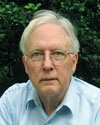
John S. James started programming
professionally in 1963, and in the early 1980s published articles on the
computer language Forth, explaining it to other programmers. He left
programming when a volunteer project led to AIDS Treatment News, an activist medical
newsletter that he founded and published for over 20 years.
-
John James wrote FIG-Forth for the DEC
PDP-11, one of the best FIG-Forth implementations.
-
He wrote the FIG bulletin board system
which later become a generalized bulletin board system.
-
Fun Fact: The FIG-Tree dial-up BBS
needed a listing in the phone book, so since it was an Apple ][, it was in the
book as "Apple Ragsdale".
-
john2james -at-
gmail.com
|
|
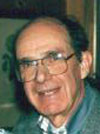
- Raymond K. Adams - 06/11/2010
-
I thought that I should tell you a little about why I
am interested in re-practicing Forth after being away from it for - hmm let's
see, almost 30 years.
-
About 33 years ago, I was attempting to set up a
laboratory to aid the teaching of the Electrical Engineering Circuits course. I
decided that the equipment we were using to teach Electrical Engineering
Circuits was woefully inadequate. We were using memory 'scopes to let the
students visualize how the voltages and currents behave in simple circuits
containing resistors, capacitors and inductors. It seemed to me that by the
time the students got the 'scopes adjusted to observe an electrical transient,
the difficulty of adjustment of the 'scopes obliterated the lessons attempted
to be taught. In other words, it was so hard to adjust the 'scopes, that the
observation of the transient had fallen into oblivion. So, I embarked upon the
invention of a Virtual Scope or V'Scope.
-
My invention took the form of a small Mac (speaking
Forth), and a satellite box that had a Forth based µP in it that used an
A/D convertor (built-in) to sample up to 4 channels of analog signal. The
invention is documented in the
IEEE
paper:
-
The
virtual scope: an impedance match to the beginning ECE student
-
The uP in the remote box took the signals and stored
them digitally. After the signal transient was recorded, the uP sent the
signals to the Mac, where the (digitized) four signals of the transient were
displayed on the screen, where they could then be printed. Up to 2048
individual samples of the 4 digitized signals were displayed. The uP spoke a
version of Forth (I programmed it). I also programmed the Mac in Mach 2, which
has unfortunately fallen into oblivion since that OS (OS7 I think, although it
may have been even before any Mac OSs) has long since been in disuse.
-
My hope now, is to use a version of Forth to
communicate with the serial ports of the Mac and thus connect to the Virtual
Scopes (I liberated several of them [they were in storage] by virtue of a
financial donation to the ECE department I worked in.) So you see my immediate
interest in re-learning Forth. Any aids you can provide toward my using Forth
to communicate with the Mac's serial ports will be appreciated.
-
rayadams -at- utk.edu
|
Individuals who responded at Forth Day 2009
|
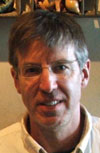
- John
Slater - 11/23/2009
-
I did 20+ years of non-linear finite element work, and
was forced to live in the Fortran ghetto. I am now a bit of a JavaScript expert
and really enjoy programming.
-
As a past robotics activity, I worked with member
Ingolf Sander on implementing Lowe's vision algorithm.
-
I currently am teamed up with David Wyland. We are
putting Forth on a small CPU and want to use a web page to program and control
a robot.
-
HomeBrew Robotics Club (HBRC) -
Forth on
Robots Wiki
-
johngslater -at- gmail.com
|
|

- Jay McKnight -
11/23/2009
-
Magnetic Reference Laboratory (MRL)
-
I use Forth at work and at home (I'm now
retired)
-
Projects: At MRL, used Forth in magnetic
recording system design calculations, and in designing and programming the
signal generation system and the magnetic tape recorder system that we use to
make "Magnetic Reference Laboratory" Calibration Tapes. This is based on Studer
A-80 tape transports, with home-built, Forth controlled, electronics and signal
and announcement generator and plotter.
-
A Forth program for calculating gap loss and
compensation for it in a magnetic recorder can be downloaded
here, and
the source code is
here.
-
RPN: Started with HP-9100A "calculator" in
1969, then an HP-35 in 1972, etc.
-
Forth Versions: Started in around 1980 with
Micromotion Forth on an Apple2; then Tom Zimmer's Forth for the Commodore 64,
where I learned about interfacing to a parallel port; then Zimmer's F-PC on an
IBM PC and clones, which I still use.
-
Help I might need: Don't need any help with
Forth now. Might be able to help a beginner with Forth -- my "expertise" is a
bit rusty.
-
jay.mck -at- comcast.net
408/252-7396
|
|

- Timothy W.
Duncan - 10/27/2009
-
How I got started with Forth: I started
programming Forth with the Hierarchical Music Specification Language (HMSL), a
Forth project at Mills College during the 80's and early 90's. That was
originally based on the Mach 2 Forth, from the Palo Alto Shipping Company. I
was living in a remote area in Mississippi (scene of my first full-time college
teaching job). Mountain View (as in Mountain View Press) seemed like the hub of
technological innovation.
-
Where I use Forth: I don't use Forth as much as
I did in the past, but I have used it on a number of music composition
projects.
-
Past projects: One past project was a Forth
program that generates all possible octave-repeating scales using numerical
sieves. Other Forth projects generate musical content based on various
algorithms, such as a 1/F noise generator.
-
Current projects: n/a
-
Future projects: A project that I would still
like to implement is an interface for accessing audio and graphics in Forth
that is consistent across Mac, Linux, and Windows.
-
Versions of Forth: Mach 2 Forth, HMSL,
Win32Forth, Swift Forth evaluation edition.
-
Why I like Forth: Expressing concepts is very
direct. Feedback is immediate. Language is intriguing.
-
Willingness to share: I am still interested in
audio subsystem access within Forth.
-
tduncan -at- cogswell -dot- edu
|
Individuals who responded at Forth Day 2008
|

- Samuel A. Falvo II - 11/25/2008
-
Where I use Forth: Mostly for exploratory or
research programming, with production code written in more conventional
languages.
-
Past projects: A
text preprocessor written in GForth, of
which a video of its evolution may be downloaded (preferably!) using BitTorrent
or directly from my website via the
blog. An assembler for the 65816 processor.
-
Future projects: A truly personal, home
computer built around Forth and the philosophies of Chuck Moore, again mostly
as a research vehicle to see to what extent if or how things could be different
in the computer industry.
-
Versions of Forth: GForth, SwiftForth for
Linux, PygmyForth for DOS, FTS/Forth (my own grossly incomplete and unfinished
Forth) for the 32-bit x86 and 65816 CPU environments.
-
Help I might need: Most importantly, I need
help to see the project through. I am notoriously bad at starting projects and
never finishing them. It'd be nice to have some help in actually completing
something for a change.
-
Willingness to share: All of my public work,
unless otherwise documented, remains under the BSD license. I am more than
willing to share and even to support, provided support loads prove reasonable.
I know I'm not the best communicator.
-
kc5tja -at- arrl.net
|
- Dudley Ackermaan - 11/15/2008
-
"I started Forth because of Cap'n Crunch (John
Drapper) using Captain Crunch Forth for the Apple II. I began the San Francisco
Apple Core Forth User's Group in 1980. We still meet twice a month."
-
rdacker -at- pacbell.net
|
Individuals who responded to "Where are they now?"
- Rick Miley - 03/28/2009
- Author of Mach1 Forth and Mach2 Forth by Palo Alto
Shipping Company
-
I could quickly develop Macintosh videos boards using
Mach2/Forth. The company was making products at a rate of one a week. We could
debug hardware and make scope triggers 100 times faster than C or assembly.
-
I also used Mach2/Forth to send my first a fax. It was
a picture of a fish. It got us funded. The fax specifications in 1988 were
CCITT gibberish. They were so cryptic I had to pound on a horrible Rockwell
chip for six months. I must have called my fax machine 1000 times. We had no
test equipment.
-
The fax company was Global Village which ultimately
went public in 1994 with a market cap of $200M.
|
|
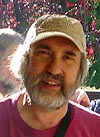
- Dave Jaffe - 07/23/2008
-
My experiences with Forth
-
Dan Pliskin from Atari introduced me to Forth in the
early 1980s. While working at the VA in Palo Alto, I briefly used 8080
PolyForth to program a powered wheelchair with the help of Kim Harris. Although
PolyForth did not work out in the hardware environment I was using, I did find
a version of Forth called Jib Ray Forth that was one of the first tethered
Forths for 8080-class microprocessors. The source code for it was available and
I was able to get it running on an Intel 8080 development processor board.
Subsequently, I configured it for use on a Z-80 STD-bus board that controlled
the powered wheelchair. I adapted that version of Forth for 8085, NSC-800, and
Z-80 processors under CP/M. An 8086 version running under MS-DOS was also
developed by an east-bay colleague.
-
I also helped support Forth's use for many years in
the Smart Products Mechanical Engineering class at Stanford University.
Eventually C became the language of choice for the class, displacing Forth.
-
At the VA, I used Forth for control of a robotic hand
and for a project that monitored balance of elderly patients.
-
Most recently, I employed Forth in a program to
validate, count, and sort zipcode and country data from a shopper's survey.
-
I continue to use Forth for embedded applications.
-
I enjoy using Forth because I can make it work the way
I desire. I believe it fosters a superior programming development and debugging
paradigm, especially in embedded systems.
|
|
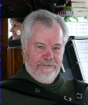
- Martin Tracy - 05/22/2008
- Martin is now Programmer Writer Lead, Visual Studio -
Extensibility Team, at Microsoft
- Webpage at
Microsoft
- martintr -at- microsoft.com
-
"As a senior programmer at FORTH, Inc., I wrote over
twenty compilers for DSP and RISC chips, and my own protected mode operating
system. Somewhere along the line, I also wrote a book for Prentice-Hall, and a
column for Dr. Dobb's."
|
|

- Leo Brodie - 12/31/2007
- Author of Starting Forth and
Thinking Forth
- leobro -at- comcast net
-
"I still have the extracurricular hobby business:
Punch and Brodie Puppet
Productions."
-
"I'm working as Director of Technical Services for
NetSpeed Leadership in Seattle, developing
Fast Tracks."
-
' NetSpeed Fast Tracks is a searchable database of
practical resources that help you and your team manage your day-to-day
workplace challenges and your career, and become more successful at work.'
- Homepage
|
- Kim Harris - 11/19/2007
- kim_harris - at- novxiii.com
-
"I'm retired from HP and spend time volunteering for
non-profits, travel, and enjoying life. I'd love to connect with Forth folks,
current or former. Forth has a fond place in my memory."
|
|

- John K. Stevenson - Inventor - Updated 07/03/2009
- js - at - nomadic.com
- Resume
- Past member of F83 and ANS Forth Standards Team
- Buried too many small companies
- Wrote a Forth Source generating Test Language, Xray
control system
- Did Systems Architecture for an Uplink Controller, a
CAD package, and an SS7 Service Node
- Systems Analyst for that unnamed Airport
- Now Systems Engineering, DO-178B planning Avionics.
(What holds Airplanes up? Standards.)
|
- Mitch Bradley - 07/09/2007
- wmb_at_firmworks.com
-
"I'm currently working on the One Laptop Per Child
project. The XO laptop boots with Open Firmware. Forth has been instrumental in
debugging the various bits of innovative hardware on the laptop."
|
- Charles Curley - Author of
Forth Dimension articles and one of
the writers of Sams
Teach Yourself Emacs in 24 Hours
-
Charles Curley is the chairman and sole member of his
"Forth Non-Standards Team" described in the Forth Dimensionsreview
article Forth: The New Model in May/June 1993 -
(V15N1). He's still a Forth Practitioner after
all these years. For his particulars, go to his
website. If you want good writing
or good programming, he can be reached at charlescurley_at_charlescurley.com.
07/09/2007
|
- Marlin Ouverson - Former Editor of Forth
Dimensions
-
Marlin provides corporate services as a custom web
site designer and producer, and as an experienced editor and publication
designer through his company,
External Design.
|
- Glenn S. Tenney - Forth Standard Team member and
co-author of MVP-Forth User's Manual: Amiga
- tenney@think.org
-
- Organizer and Chair of the THINK Conference (formerly
Hacker's Conference)
- PO Box 6983
- San Mateo, CA 94403
- 650/574-3420
- 650/574-0546 fax
-
THINK Conference
Homepage
|
- Howard Pearlmutter - 02/06/2004
-
"My Forth background has been mighty handy in my
current incarnation - guruing about Extensible Languages, Virtual Machines,
Enterprise Architectures, Management Strategy, etc. That's on the public
seminar and private consulting side; on the personal coding and system
administration side, I've been doing a lot with XML, J2EE, J2ME, Linux, SVG,
XSL, etc."
-
"As a consulting mercenary and general hitech nomad,
I've logged 59 months overseas during the past 7 years, mostly Australia,
Singapore, Israel, and England. Currently on US east coast, without current
plans to be out west anytime soon, but would love to rendevous with you all
when I do eventually make it back to California. Until then, please convey my
best wishes to everyone in the Forth Family."
-
Executive Summary
|
- George Nicol - proprietor of
Silicon Composers,
Inc.
- george -at- inscenes.com
-
"These days I'm mostly making short films and
writing/recording music in Buenos Aires. I recently finished a new film:
Hooked on You.
I'm also planning to release a music CD this year." 01/23/2004
-
InScences Homepage
|
- Bill Ragsdale - one of FIG's
founders
- fig -at- billragsdale.cc
- Website
-
"After retiring from Dorado Systems (a 100% Forth
shop), I now conduct statistically based investment research and publish a
financial advisory letter (Good
Fortune). I am now living in Woodland, CA, phone 530/661-0413."
02/04/2004
-
Forbes
Interview - 07/12/2002
-
An
article Bill
wrote about FIG-Forth on the
JOLT
computer.
-
11/15/2008 - "I was the first Forth Interest Group
President and father of only and
also."
|
- Tom Zimmer - Primary author of
FPC, Win32Forth, and TCOM
- win32forth -at- mac.com
-
"I have been with Thermo (Thermo Electron in Austin, TX) now for over
10 years, moving from Forth programmer, to C/C++, to Java, and currently C#. I
haven't written any Forth in over 5 years, which is sad but true. The Forth
language has served me well over the years, and it will always have a special
place in my heart. Always remember: You don't write "FOR" an operating system
in Forth, you "ARE" the operating system in Forth. FORTH FOREVER!!"
(07/06/2007)
-
Homepage
|
 FIG
Home page FIG
Home page
|